

Dear Ms. Goode
A letter long overdue (with footnotes).


Written and sent via email this morning, with a prayer that it find its addressee, but just in case…
Dear Ms. Goode,
I hope this email finds you well, and that you remember me from Ellicott City Middle School1. I certainly could never forget you; you changed my life.
I was thinking about you the other day, and how you did that. How, toward the end of seventh grade, you gave your English class the final assignment of writing a short story like the ones we had been reading all year.
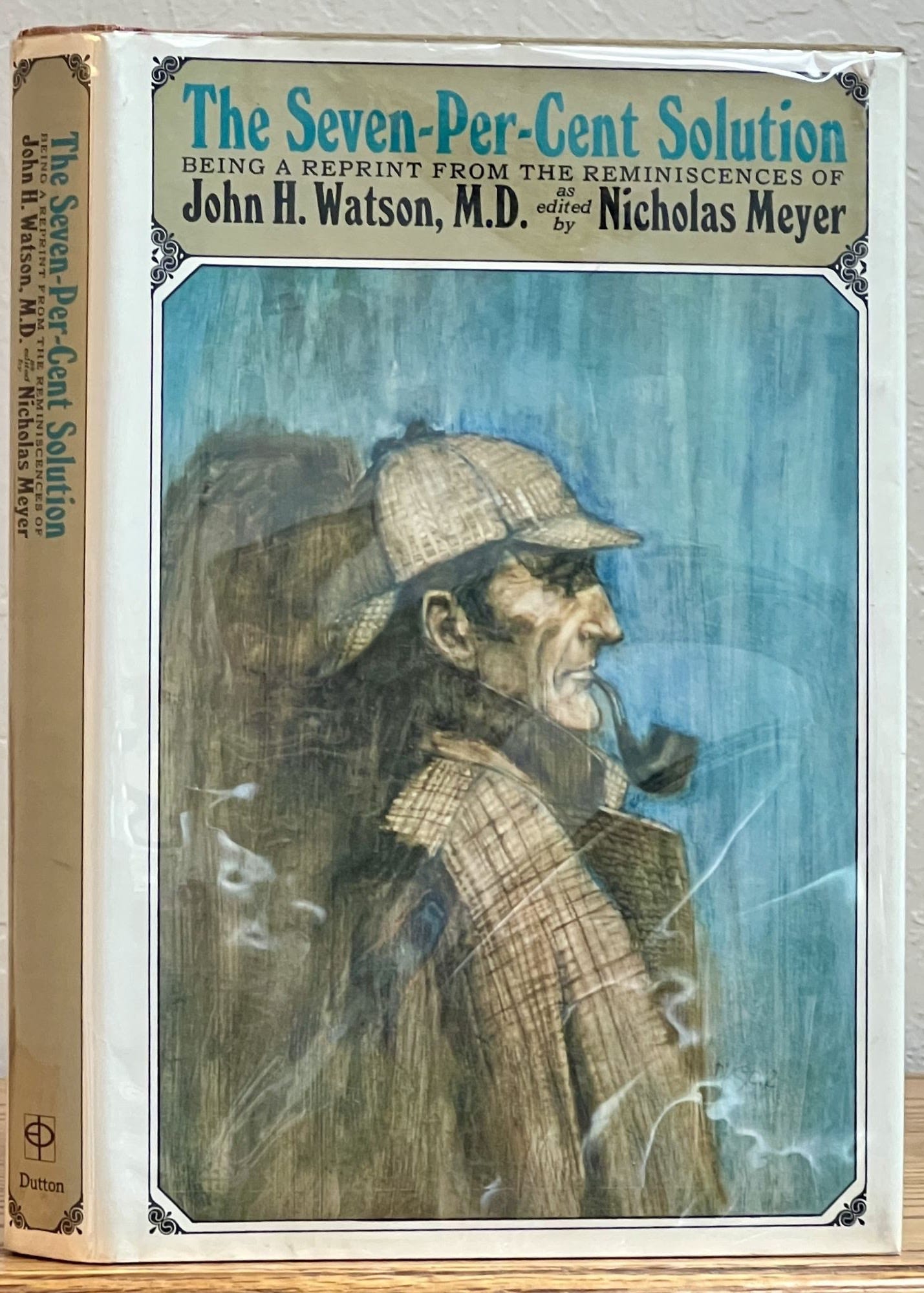
This turned out to be perfectly timed. I was in the grip of Sir Arthur Conan Doyle’s Sherlock Holmes stories (I think you might actually have had us read “The Adventure of the Speckled Band” that year), and I had just read a then-recent novel, The Seven Percent Solution, that blew my mind, because its author, Nicholas Meyer, had had the nerve to write his own Sherlock Holmes story!2 (And it was a good one—he had Holmes meeting and getting treated for his cocaine addiction by Sigmund Freud !) Until then, I hadn’t known such a thing was possible. I hadn’t known it was, well, allowed.
Then came your felicitously timed assignment. So I decided to try to do what Mr. Meyer had done—to have that nerve. I decided that Holmes and Watson would take on Professor Moriarty, who had built an ironclad warship to terrorize the seas, and that they would naturally be helped in this mission by Captain Nemo, from Twenty-Thousand Leagues Under the Sea.3
But as soon as I sat down to write, I realized what my job really was: to pay attention to language, specifically the English language, and even more specifically, the English language as deployed around the turn of the century (the century we were still living in, at the time) by this one Anglo-Irish ex-doctor in the popular magazines of his time. That was what Mr. Meyer had done—his Dr. John Watson, narrating The Seven Percent Solution, had sounded just like Conan Doyle’s (at least to my twelve-year-old’s ear).
It turned out to take work. I had to keep my eye, or my ear, my inner ear, on so many things at once: diction, word choice, cadence, sentence structure. I had never done that before, while writing, at least not consciously, with such heightened awareness. But it turned out to be work that I enjoyed—that I loved. Even more—it was work that I was good at. I had a knack.
Do you know how I knew that last bit? You told me so. Ms. Goode, you gave me an A on “The Revenge of Captain Nemo.”
You were not, I believe, in the habit of just handing out As. You had definitely been sparing of them with me! Earlier that year I had written a “history of comic books” for the research paper assignment and I was lucky to scrape by with a B! (Research papers were never my thing.)
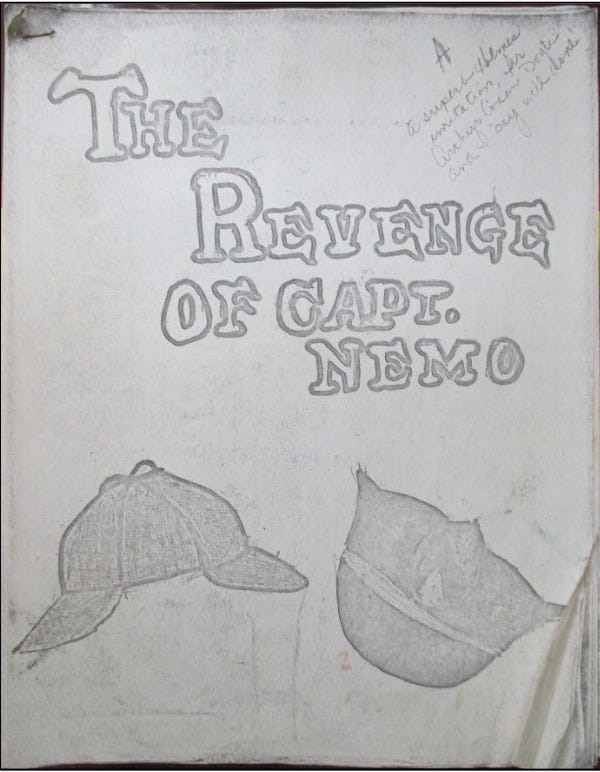
“A superb Holmes imitation,” you wrote under that big beautiful letter-grade. “Sir Arthur Conan Doyle and I say well done.”
But, Ms. Goode, it wasn’t Sir Arthur’s approval that I’d been hoping for. It was yours. You had such high expectations, for all of us, and you were not at all shy about letting us know that. You esteemed literature so highly, and took so much evident pleasure and satisfaction from reading it, from thinking and talking about it. And—yes, I’m starting a sentence with “and”—you knew how to communicate that love and esteem to us, by taking it, and us, and our own writing, so seriously. You were—in your calm, clear-eyed, good-humored way—demanding, like all great teachers, and like the greatest of the great, rewarding. Like literature itself, you rewarded the attention we paid you.
I wrote that story for you, Ms. Goode, and you gave me an A, and here I am today, a dozen novels, etc., later, wondering if you know about the blessing that you bestowed on me, back in 1975. After that, I knew I was ready. Your classroom was like New York in the song: if I could make it there, I could make it anywhere. I’ve won some prizes and awards for my writing over the years, but none of them, not even the Pulitzer, has meant as much to me as that grade. I knew exactly, and proudly, just how much it was worth.
With gratitude and love,
Michael Chabon
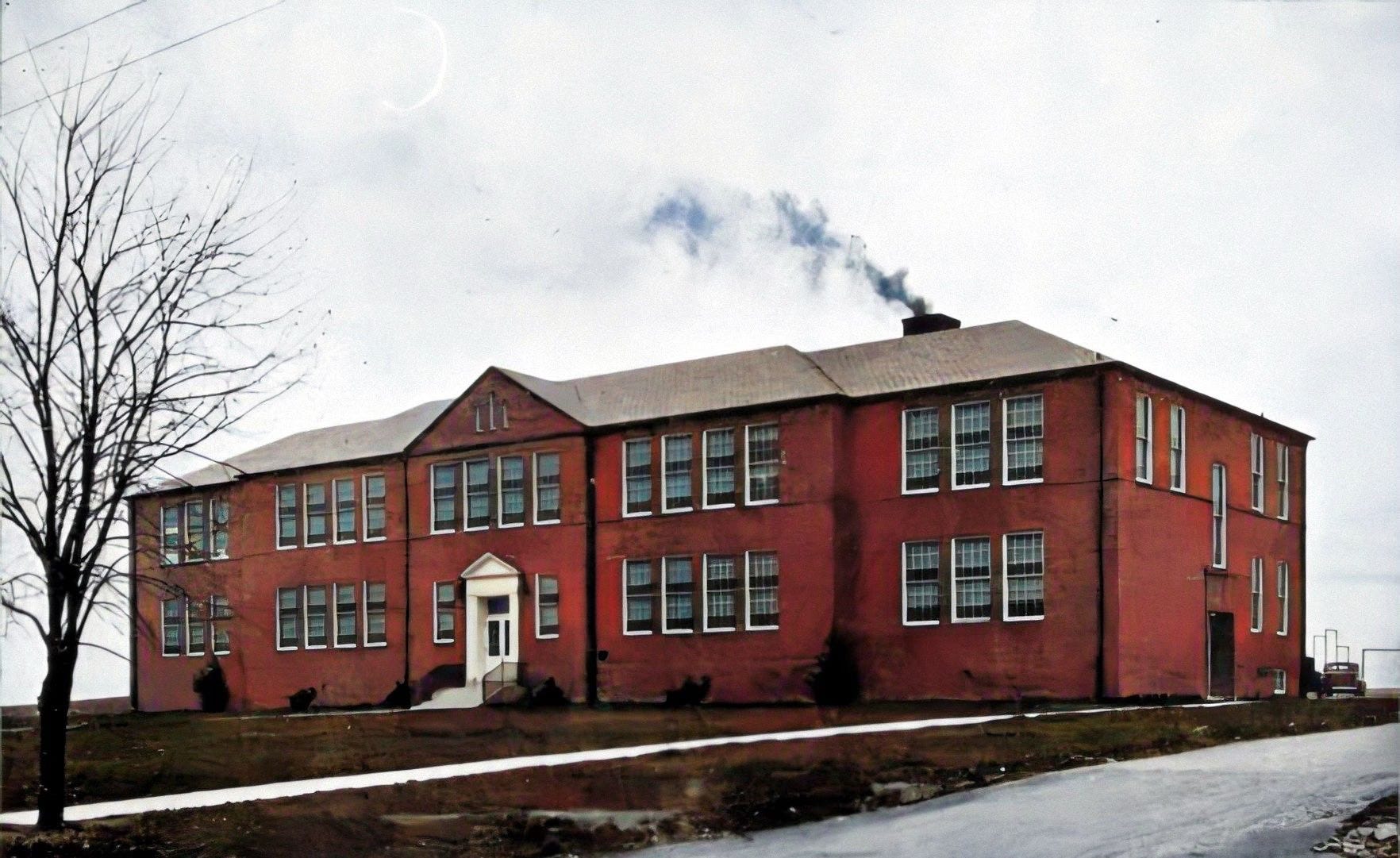
Ellicott City (MD) Middle School, desegregated only in 1965, a full nine years after Brown v Board of Education. Demolished 1999.
Published in 1974, it introduced me to the concepts, and the pleasures, though not the terminology, of pastiche, fan fiction, the literary cameo, and the retcon—all in a single feat of bravado that was, I think, an under-recognized cultural milestone.
.
A conceit inspired by an “Addendum” to Philip José Farmer’s “fictional biography” of Tarzan, Tarzan Alive (1972), in which Farmer postulated that an ancestor of the future lord of the jungle was among the passengers of two coaches passing Wold Newton, England, in 1795, just as a radioactive meteor fell from outer space into a meadow on the outskirts of the village.
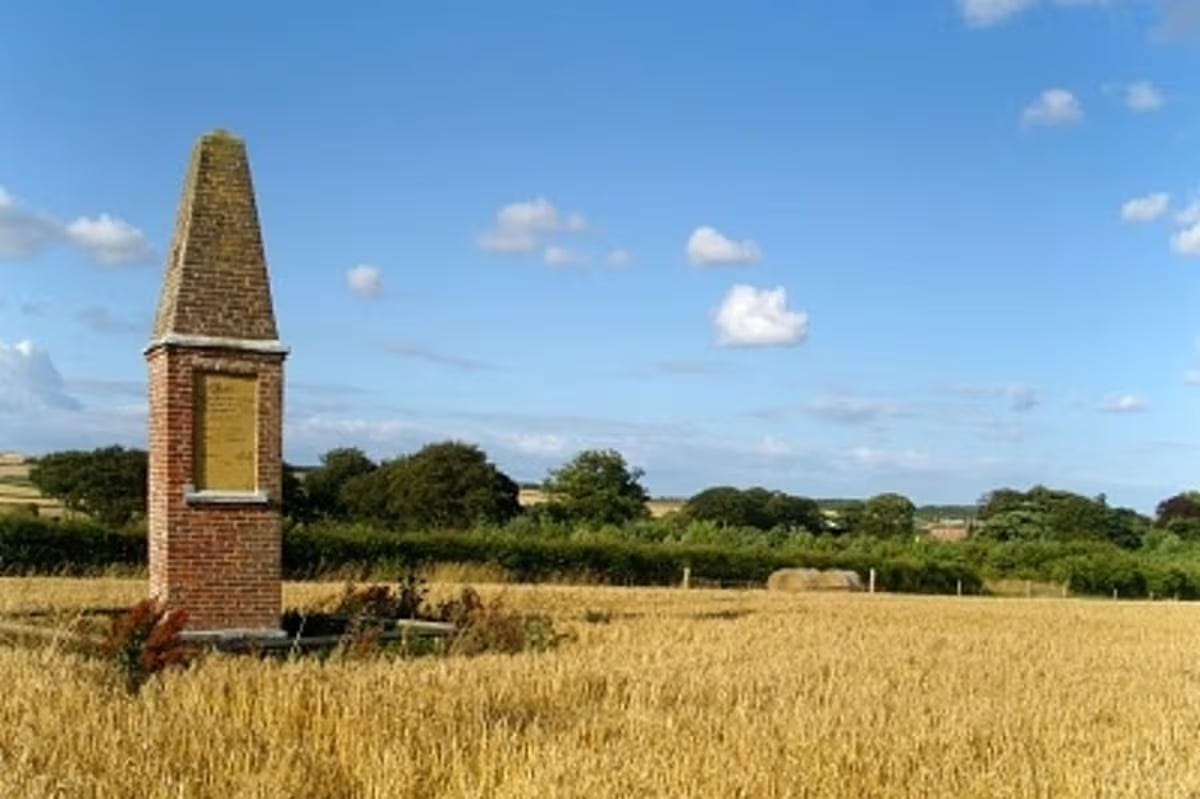
Farmer claimed that the (purely speculative) radiation from the space rock caused a genetic mutation that affected all the passengers’ descendants, among them the eventual John Clayton, Lord Greystoke—Tarzan. Farmer extended his conceit by claiming that not only Tarzan, but all the great heroes and villains of 19th and 20th century popular literature—the Scarlet Pimpernel, Sherlock Holmes and Professor Moriarty, Doc Savage, Phileas Fogg, Fu Manchu, Sam Spade, James Bond—were descended from the people riding in that pair of coaches, a superhuman lineage of siblings and cousins descended from that common ancestor and that catastrophic event.
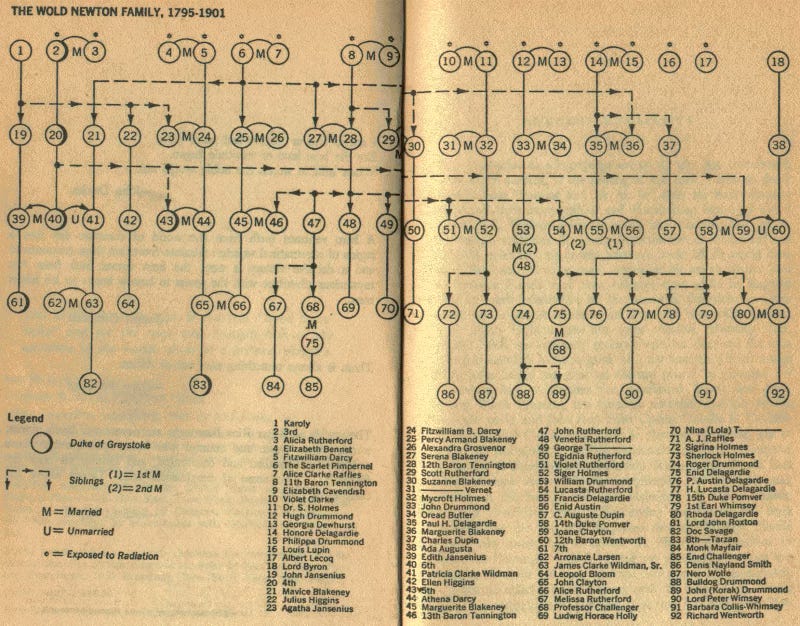
This is a distinctive flavor of metafiction—more like macrofiction—that gets at another kind of truth about the indeterminacy of boundaries between “fictional” and “real.”
The 1970s were clearly a heady time for eager if unwitting devotees of what might be called “mass postmodernism.”
And how many potentially great writers didn't have a Ms Goode to show them the way? It's almost as lucky as being imbued with magical powers from a radioactive meteorite.
I will be checking back regularly, hoping for a response from the esteemed Ms. Goode.