

Doctorow’s Escape
Thoughts on a Master of Elusion

[Note: 13 years ago this week I met E.L. Doctorow (1931-2015) for the first and only time.* A little more than two years later, learning of his death, I wrote the following.]
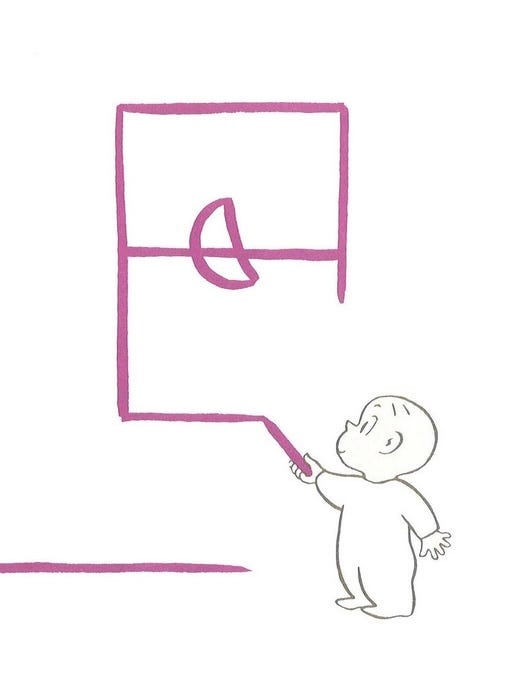
Every self-respecting cartoon hero knows that when you find yourself hemmed in on all sides or lost in an endless blank expanse all you need for liberation is the stub of a pencil. You stand back. You take the measure of the problem. Then on the very fabric of reality itself—your reality, the one that imprisons you—you draw an upright rectangle. You fit an inner edge of the rectangle with a little circle about halfway down. Then you grab hold of the doorknob you just made, give a push, and make your escape. Before, there were only walls, only confinement and prohibition and discouragement; or there was nothing at all, a blank of infinite impossibility. Now, thanks to you, there is a door.
When great writers pass through the doorways that they have made they leave them open, behind them, so that others can follow. Every young writer setting out to find a means of egress from the walls and stifling blanknesses of whatever box they were born into knows how it feels to come upon one of these doorways and catch a glimpse of blue sky, and feel a cool breeze blowing in from the other side. If you are a Jewish American writer of my generation then you will have passed through a door that was made by Saul Bellow, or Cynthia Ozick, or Bernard Malamud, or Philip Roth. Those Jewish writers and their peers opened a way into in American literature that had been not there before them. If you want to write works of literature that are also unabashed works of fantasy or science fiction—an ambition for which the world will often seek to imprison you in its darkest boxes, fence you around with its most forbidding blanks—there is no sweeter relief than stumbling on the door left open for you by Ursula K. LeGuin, whose space operas and heroic fantasies set a standard of beauty and intensity and depth of understanding to which all literature aspires. And if you came of age, as I did, in a culture hungover and embittered from the lingering effects of a century-long bender triggered by the realization that history and truth, as we have always known or received them, are—to put it politely—works of fiction, than the way out—at least for me—was opened by E. L. Doctorow.
Doctorow’s trick, worthy of Bugs Bunny himself, was to turn that melancholy equation inside out, like an old gray cartoon trenchcoat that, when you reverse the lining, turns into a circus tent or a working pair of feathered wings. If history is to be encumbered with all the perceived liabilities of fiction—subjectivity, incompleteness, the fact that it’s all a bunch of made-up bullshit—then fiction might as well avail itself of the discarded privileges that history once arrogated to itself: an air of objectivity, a tone of authority or cultural omniscience, and most usefully an irresistible glamor of being true—lower case t. When Doctorow came along those privileges were, after all, just kind of lying around in pieces on the floor. Nobody was really using them.
And so, shyly or slyly at first, with 1971’s The Book of Daniel and then in 1975 with such stunning audacity that I can still remember my parents’ awed dinner-table conversation, that summer, about a novel they were reading, called Ragtime, that went up to the overgrown wall enclosing the garden of fiction and opened the doorway to history. Into that walled garden all manner of strange creatures came creeping: Harry Houdini, J. P. Morgan, Emma Goldman, Booker T. Washington and, not least, Doctorow’s own imagination, disillusioned but not disheartened, hip to history’s lies without any loss in his dispassionate sympathy for the human weakness that underlies them.
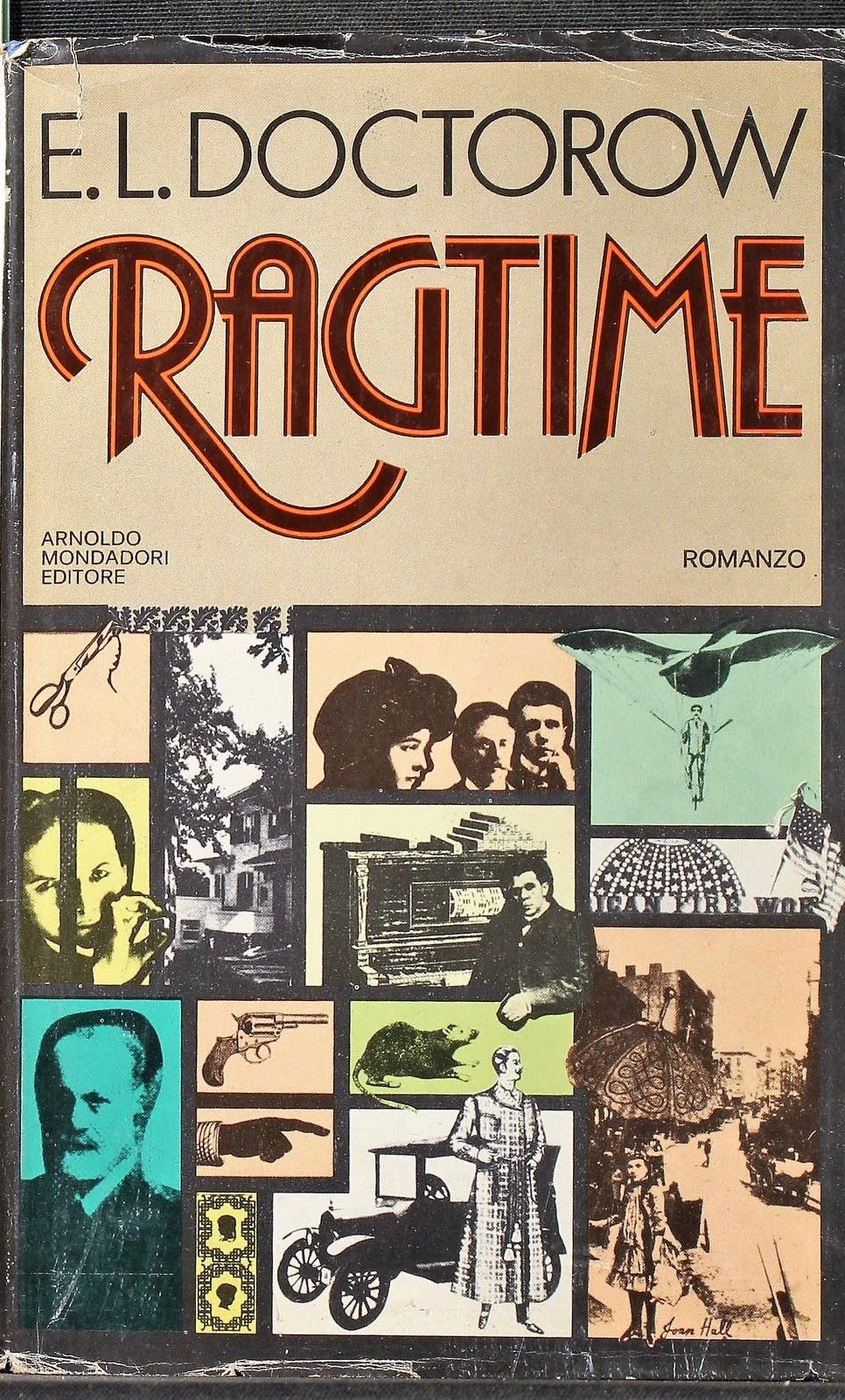
In opening that particular door, Doctorow made a startling discovery: done properly, the incorporation of historical figures into a fictional context did not come off as some kind of smart-ass critique of subjectivity and the fictive nature of history. Done properly it just made the lies you were telling your readers—with their full and willing consent, of course—sound that much more true. And that small-t truth then became a powerful tool for getting across whatever Truth, subjective and fragmentary though it might be, that you felt you had it in you to express.
When I started to work on the novel that became The Amazing Adventures of Kavalier & Clay, I knew that I wanted readers to believe, at least while they were inside the novel, that Joe Kavalier and Sam Clay were real people, had been real people. That there really had been an Escapist Comics, Inc., headquartered in the Empire State Building, which had prospered for a brief moment in the 1940s because of the success of a costumed superhero character who had been a real-life rival, in the newsstand marketplace, to Superman and Captain America. That I knew such a trick was at least possible, and that I understood the means, at least, by which it could be pulled off, was entirely due to Doctorow and his books—not just Ragtime but Loon Lake and The Waterworks and Billy Bathgate and World’s Fair, with its stunning and clever child’s-eye fictional redeployment of the Hindenburg disaster. By presenting, with a straight face, the interaction between its invented characters and people like Orson Welles, Salvador Dali, anti-comics crusader Dr. Frederic Wertham, and composer Raymond Scott, Kavalier and Clay could assert its factitious factuality, ensnaring a reader in a tangle of pleasurable doubt—I hoped—while smuggling into the novel a true accounting of the cultural milieu and influences that had helped shape the comic-book medium in its formative years.
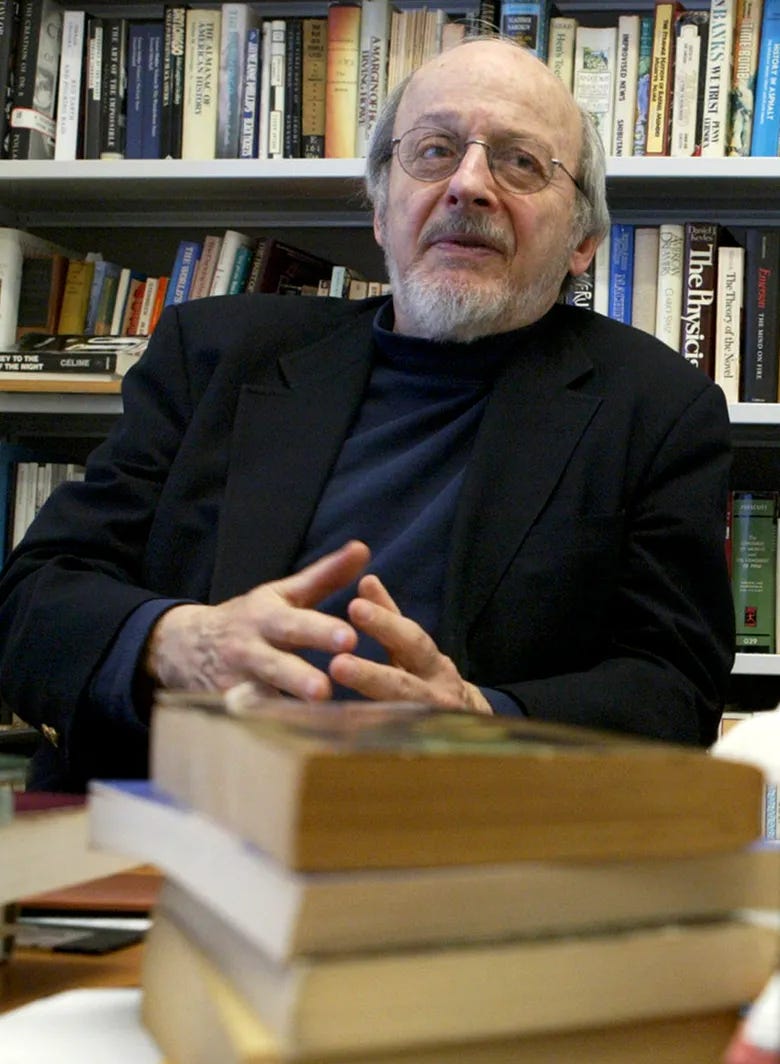
I had the opportunity to sit next to Doctorow, a couple of years ago, as a large group photograph was taken at an annual literary event in New York City to which we’d both had the honor of being invited. In the few minutes that I could be sure I would have before the moment came to sit still and shut up for the picture-taking, I tried to tell Doctorow how crucial—how salvational—his work had been to me, from the moment I had first read Ragtime and in particular as I was setting out to write Kavalier & Clay. I wanted to explain how I had come of age, as a writer, in a time when American fiction could sometimes feel like a choice one had to make between the airless box of so-called “dirty realism” and the blank, mirrored expanse of so-called postmodernism; how Doctorow’s work—playful with the “facts” of history in a postmodern way, gimlet-eyed as the dirtiest realism about the fact that history, unmediated and un-narrated, was a bloody mess—had seemed, like no other writer’s, to offer a magic way out.
God knows what I actually said; not that. Doctorow listened graciously and politely as I nattered, but I could see he was ready to get going. He knew from past experience that the afternoon’s program, to follow the photo shoot, promised to be long and slow-moving. His placement beside me, it turned out, was the chance result of his having requested a seat at the end of a row, to facilitate an early and unobtrusive escape. When I was done babbling, Doctorow thanked me, clasped my hand in both of his. They were the hands of an old man; and I was older, so much older, than I had been when I first fell in love with Ragtime. I looked down at those bent and spotted hands enfolding my middle-aged one, and felt the messy truth about history.
“Thank you,” he said. “That means a lot.”
We fell silent, and sat still, and held our smiles for the required interval as the photographer clicked away. Then Doctorow patted me on the shoulder, ducked his head, and stood up. He held up a couple of fingers in a little farewell salute.
“I’m outta here,” he said, already moving toward the door.
☉
*Though I had, previously, caught a brief glimpse of him, being hurried past a crowd of fans and would-be acolytes, myself included, at the university-sponsored writers’ conference in Pittsburgh, when I was an undergraduate, on which, very loosely, I basedWonder Boys’ WordFest.
In reading this I have just realized that in my mind’s files Joe and Sam are in the history section. I swear I read their obits at some point. I mean, it really happened, right? Right?
The times I have met my idols and been able to say "thank you for what you made" have been few, but so joy-welling. For me the door you describe was first opened by that last verse of "Mr. Tambourine Man" about being silhouetted by the sea, etc. Here's to the hopes of youth realized by the steel of maturity.